If you want my blunt answer on the 10 year anniversary ring question, here it is: spend on cut and comfort before carat, and settle the metal before you ever set foot in a store. I have walked three friends and one extremely indecisive brother-in-law through this milestone, and the couples who end up happiest treat it as a wearability decision rather than a status purchase. The anniversary jewelry by year guide on this site maps the entire milestone ladder; this article stays locked on year ten.
Table of Content
Here is the part nobody warns you about: year ten usually arrives with a mortgage, two kids, and a spouse who suddenly has very specific opinions they never voiced at year one. That is exactly why I stopped recommending oversize solitaires to everyone and started asking four dull questions instead — who wears it, how often, alongside what, and what happens when it breaks. Boring questions produce rings that actually get worn.
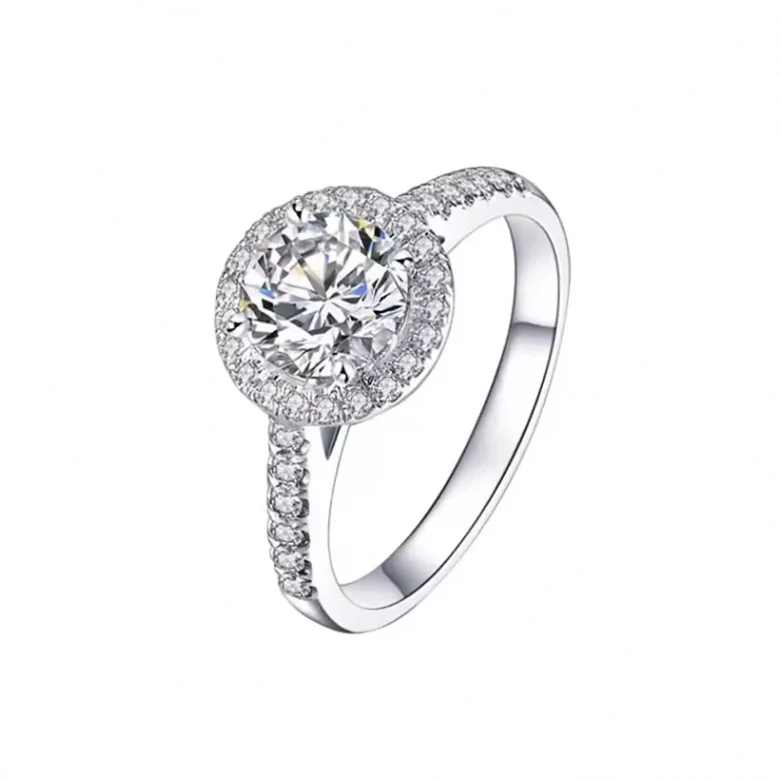
Which 10 Year Anniversary Ring Style Wins
The Four Silhouettes That Actually Get Worn
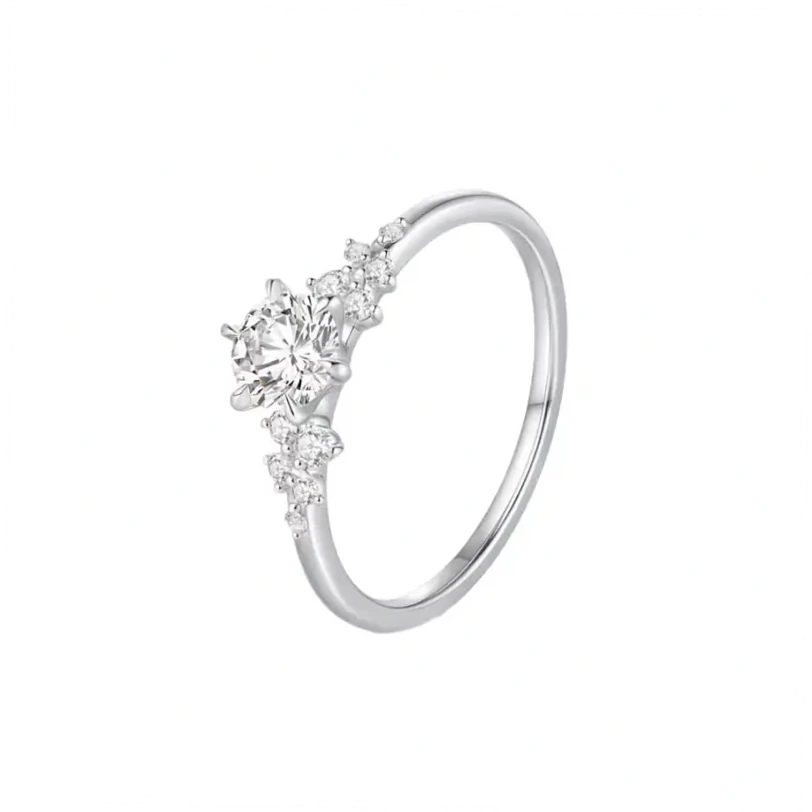
Four silhouettes do almost all of the heavy lifting at this milestone: the classic solitaire, the three-stone, the eternity band, and the bezel set. Solitaires are the safest bet because they never date and they resize without drama. Three-stone designs carry the past-present-future symbolism that lands beautifully at ten years. Eternity bands photograph gorgeously but punish themselves against doorframes. Bezels trade a sliver of sparkle for genuine armor.
What matters more than the silhouette is the finger it will live on. Someone who types eight hours a day, lifts weights, or works with their hands needs a low-profile setting rather than a tall basket. I have watched a four-carat cathedral setting spend nine months inside a drawer because its owner was terrified of knocking the stone loose. Height is the enemy here, not size.
| Silhouette | Day-to-day risk | Best suited to | Common metal |
|---|---|---|---|
| Solitaire, low set | Low | Classic taste, first upgrade | Platinum, 18k white gold |
| Three-stone | Low to moderate; side stones snag | Sentimental milestone buyers | Platinum, yellow gold |
| Eternity band | High on palm-side stones | People who never remove jewelry | Platinum, 14k gold |
| Bezel set | Very low | Nurses, gym-goers, active jobs | Platinum, titanium |
Why the Symbolism Shifts at Ten Years
The promise ring vs anniversary ring difference is really about commitment stage rather than stone size: a promise ring marks intent, while a tenth-anniversary ring marks a decade of evidence. That distinction should loosen your design rules considerably. You are no longer guessing about your partner’s taste — you have ten years of data, including which earrings they lost and which watch they still wear every single day.
Ten years also means the gift can stop being a surprise and start being a conversation. Surprises work at year one because the stakes are small; at year ten they work against you, because the wearer has a decade of preferences, a career, and possibly a profession that forbids rings entirely. Ask first. The romance survives the question, I promise.
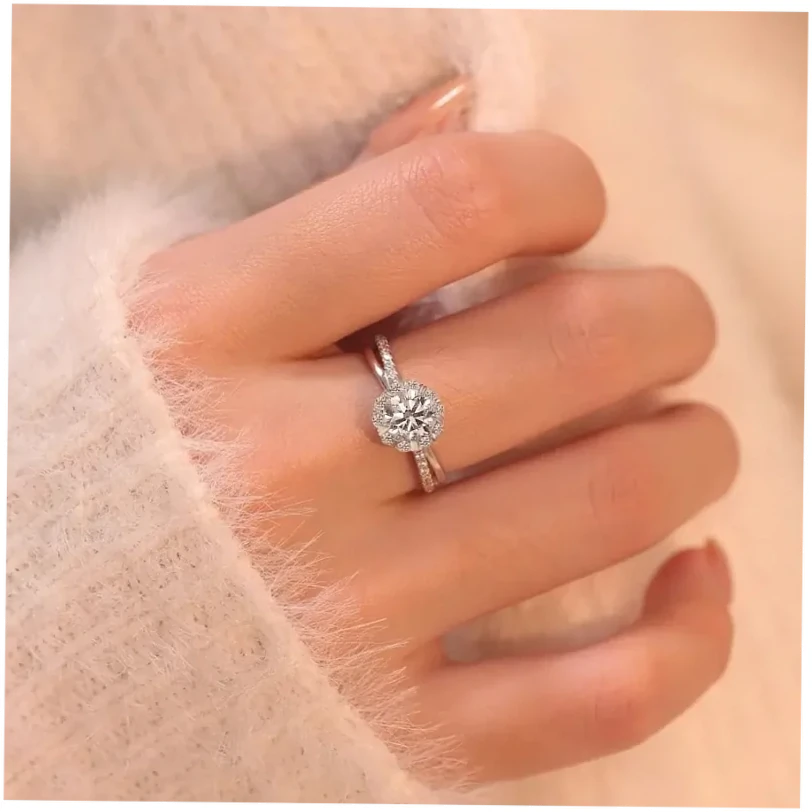
Metals and Finishes That Age Gracefully
Choose the metal for maintenance rather than for the color you liked inside a display case. Platinum costs more upfront and needs polishing less often, while white gold looks brightest on day one but requires rhodium re-plating roughly every twelve to twenty-four months. That plating runs about forty to ninety dollars per ring, so treat it as a recurring cost rather than a nasty surprise.
Yellow and rose gold hide scratches better than white metals because the alloy runs all the way through the metal instead of sitting on top of it. Palladium sits between platinum and gold in price and weight, though fewer jewelers repair it confidently. If your partner has any nickel sensitivity, stay with platinum, palladium, or eighteen-karat yellow gold rather than a plated white alloy.
Then there is the interior of the band, which nobody inspects and everybody feels. Comfort-fit bands curve on the inside and feel larger than their stated size, which can save you an entire resizing. Flat-interior bands have slightly more metal, which matters if you plan to polish the ring repeatedly over the coming decades. Try both before you commit.
Diamond vs Gemstone for 10 Year Rings
Where Each Stone Genuinely Wins
Diamond wins on absolute durability and marketplace clarity: it scores a ten on the Mohs scale and shrugs off daily abuse. Sapphire and ruby come next at nine, which is why both make excellent center stones for people who never remove their jewelry. Emerald, morganite, aquamarine, and opal sit lower and reward gentler handling. None of them is a bad choice; they are simply different jobs.
A well-cut diamond also forgives a smaller budget more gracefully than most shoppers expect, because sparkle comes from proportions rather than size. A superb 0.9-carat stone consistently outperforms a mediocre 1.3-carat stone in real daylight. If you must choose between improving clarity and improving cut, cut wins in every side-by-side comparison I have ever set up on a windowsill.
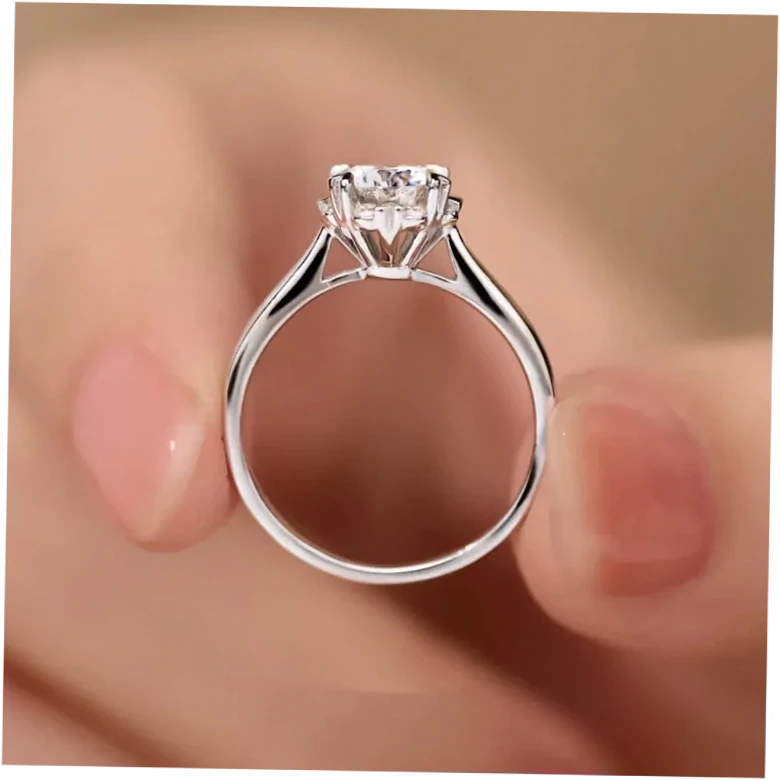
Claimed Durability vs What Owners Report
Every vendor will tell you the stone they sell is ‘everyday durable,’ and that phrase is exactly where marketing and lived experience diverge most sharply. Time on the finger tells a more honest story than any certificate. What follows reflects what I consistently hear from owners after two to three years of continuous wear, set against the standard retail framing.
| Stone or setup | Retail claim | Owner experience after 2-3 years |
|---|---|---|
| Diamond solitaire, 4-prong | Lifetime wear, no worries | Prongs loosen; tightening twice a year is normal |
| Sapphire center | Nearly as hard as diamond | Excellent wear; facet edges polish down slowly |
| Emerald | Fine for daily wear | Chips along facet edges; often moved to occasional wear |
| Morganite | Durable and romantic | Intact but surface scratches dull the sparkle |
| Opal | Delicate but wearable | Water sensitive and prone to crazing; frequently retired |
| Full eternity band | Comfortable forever | Palm-side stones wear flat or fall out within years |
Notice that almost nothing fails dramatically. Most disappointing stones quietly migrate to the jewelry box and stop being worn, and that migration is the real failure mode — invisible in a showroom, obvious across a decade. If daily wear is the entire point of the purchase, judge every option by whether it survives an ordinary Tuesday.
Lab-Grown, Natural, and the Resale Question
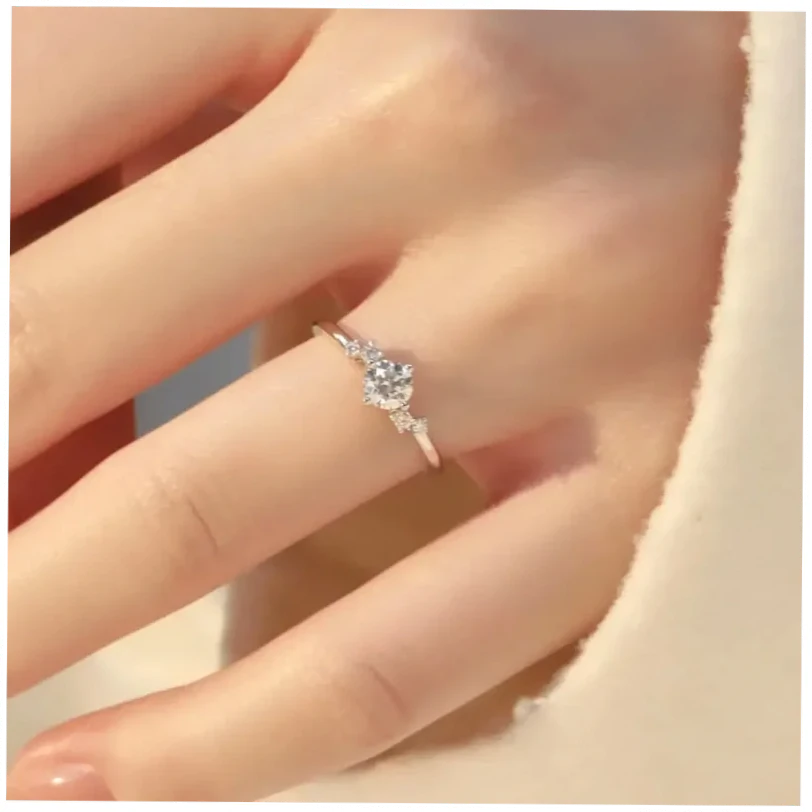
Lab-grown stones deliver a comparable look for a fraction of the price, and I recommend them without hesitation to anyone who plans to wear the ring for life. If resale matters, the math shifts: natural diamonds typically recover only part of their retail price on the secondary market, and lab-grown resale is thinner still. Treat every quoted percentage as a rough range rather than a promise.
Colored stones need their own rules. Emeralds, opals, and many treated gemstones should never go into an ultrasonic cleaner or a steam machine, and emeralds in particular are commonly oiled, which heat and solvents can undo. Warm water, a soft brush, and a bowl placed over the sink are the safest routine for anything that is not diamond, sapphire, or ruby.
How to Wear Your 10 Year Ring
Stacks, Hands, and Daily Habits
The practical question of which hand for anniversary rings comes down to whether you want the piece paired with the wedding set or standing alone on the other hand. Stacking on one finger adds friction between bands, and friction is what wears metal away over a decade. Give each ring a millimeter of breathing room and the whole stack lasts longer.
Daily habits quietly decide longevity. Removing the ring for gym sessions, gardening, and dishwashing extends prong life more than any insurance policy ever will. I keep a small ceramic dish beside every sink in my house for exactly this reason, and the rings that live in those dishes look dramatically better after five years than the ones that never leave a finger.
Sizing and Resizing Limits
Size the ring for the finger you have now, not the one you had at the wedding. Knuckles widen, and a band that felt snug at twenty-five can be genuinely stuck at thirty-five. Build a resizing allowance into the design from the start: most plain bands handle two sizes comfortably, while full eternity bands and tension settings often cannot be resized at all without rebuilding the piece.
| Ring type | Resizable? | Typical service need | Notes |
|---|---|---|---|
| Plain solitaire band | Usually two sizes up or down | Prong tightening once or twice a year | Best long-term flexibility |
| Three-stone | About one to 1.5 sizes | Side-stone inspection | Structural shoulders limit range |
| Full eternity | Rarely; often needs remaking | Stone replacement | Palm-side stones take the beating |
| Channel-set band | Limited | Channel re-tightening | Specialized metalwork required |
| Tension set | No | Annual inspection essential | High replacement cost if damaged |
Mistakes That Ruin 10 Year Anniversary Rings
Shopping for Photos Instead of Fingers
The most common regret I hear is buying for the photograph. Tall settings and wide spreads look spectacular under ring lights and awkward in real life. Ask to see the ring on a hand in shade, beside a window, and while making a fist. If the stone digs into the neighboring fingers, no certificate grade will rescue that purchase.
Ignoring the Fine Print on Warranty and Repairs
Warranties are written to protect the seller, not the ring. Many ‘lifetime’ policies require an inspection every six months at the original store, and missing a single appointment can void coverage on prongs and stones. Ask explicitly what is covered, how often you must appear, and what shipping and labor cost when you do. Get the answer in writing before the card comes out.
Letting the Band Outshine the Stone
Pavé and channel bands look superb when new but create dozens of tiny failure points that demand attention far more often than a plain shank. Two or three millimeters of clean metal beside a great center stone reads as more expensive five years later than a heavily studded band that has already lost three melee diamonds. Density of small stones raises maintenance, not value.
Copying Someone Else’s Ring
Inherited jewelry and a best friend’s ring are wonderful references and terrible blueprints. An heirloom sized for someone else’s hand often cannot be resized into yours, and a design that flatters a long, narrow finger can overwhelm a shorter one. Steal the idea, not the proportions, and always try the finalist on your own hand before committing.
A 10 Year Anniversary Ring That Lasts
Almost every couple I know began this tradition small — a modest 1st anniversary jewelry gift, then something slightly more considered each year — and by year ten the emotional ledger runs far longer than the receipt. A decade deserves a deliberate purchase rather than a reflexive upgrade, and it deserves a plan you can execute in one weekend instead of three months of scrolling.
A One-Weekend Decision Path
Block Saturday morning for trying rings on and Sunday for deciding. Choose the silhouette first, the metal second, and the stone last. Narrow the field to exactly two finalists, sleep on it, then return and compare them side by side in natural light. The ring that wins is almost always the one you forgot you were wearing by the time you reached the parking lot.
Then run the paperwork check before you pay: written warranty terms, a return window of at least thirty days, an appraisal for insurance, and confirmation of the resizing policy in writing. This step takes twenty minutes and prevents most of the disputes I hear about later. Nobody has ever regretted reading a return policy.
What One Real Upgrade Actually Returned
A client traded a 1.1-carat natural solitaire for a 1.8-carat lab-grown stone in a bezel setting. She sold the original stone for roughly 35% of its nine-year-old purchase price, spent about 60% of that on the new stone, and pushed the remainder into the setting. Her verdict after a year: the ring is worn daily, and that behavioral change, not the carat weight, was the real return.
If you remember one thing from a stranger who has watched this play out repeatedly, make it this: choose the ring your partner will still be wearing on an ordinary Wednesday five years from now. Carat weight fades into the background, sparkle becomes normal, and certificates live in a folder. Comfort and durability never stop mattering. Verify the warranty, plan the resizing, and put a maintenance date on the calendar before the box leaves the store.
10 Year Anniversary Ring Questions, Answered
Is a 10 year anniversary ring supposed to be a diamond?
No, and insisting on diamond is one of the most expensive assumptions in this entire category. Sapphire and ruby bring a nine on the Mohs scale with far better value per carat, and morganite or aquamarine can be beautiful in protected settings. The right stone matches how your partner actually lives, not what the catalog leads with.
Which hand should a 10th anniversary ring go on?
There is no binding rule. Most people wear it on the ring finger of the right hand when the left already carries a wedding set, and on the left when they want it to read as part of the marriage stack. Comfort and stacking friction should decide it, not etiquette.
Can a 10 year anniversary ring survive daily wear?
Yes, if you choose the setting for it. Bezel and low-profile settings, sapphire or diamond centers, and platinum bands handle daily life comfortably. Tall baskets, unprotected emeralds, opals, and full eternity bands are the combinations that most often end up retired to a drawer within three years.
Is upgrading an existing ring better than buying new?
Often, yes. Reusing a sentimental stone in a new setting typically costs a fraction of a comparable new purchase and preserves the original diamond. The trade-off is that you keep the old stone’s proportions, so a dramatic size change may require buying something new after all.
How much should you spend on a 10 year anniversary ring?
Any rule tied to income is arbitrary, but most couples I work with land somewhere between one and three months of household income, treated as a one-time expense. Remember the ongoing line: rhodium plating every year or two, prong checks twice annually, and an insurance rider. Overspending usually happens on the stone and gets regretted during maintenance.
What do people regret most after buying?
Structure outranks size in almost every regret story I have collected: settings too tall to wear, eternity bands that lost palm-side stones, and warranties voided by a missed inspection. Almost nobody complains the stone was too small. Several complain they cannot wear the ring they spent months choosing.
Does it need to match the wedding set?
Only if you want it to. Matching metal and a similar design language keeps the stack cohesive, while a deliberate contrast — yellow gold beside a white set, or a bezel next to a prong-set solitaire — reads as intentional when proportions stay close. Harmony of proportion matters far more than identical styling.
References and Further Reading
For hardness and durability figures, start with the Mohs scale used in standard mineralogy references and the Gemological Institute of America’s gem encyclopedia. The Federal Trade Commission’s Jewelry Guides explain how diamonds, lab-grown stones, and treatments must be disclosed by sellers. For metal maintenance schedules and plating intervals, manufacturer care documentation from platinum and gold alloy refiners is the most reliable source. Figures quoted here are typical ranges drawn from retail practice and owner experience, not guarantees for any individual ring.
[…] ten is the first milestone where many couples upgrade from symbolic to significant. A 10 year anniversary ring often becomes the first serious diamond purchase for couples who skipped an engagement upgrade. Tin […]